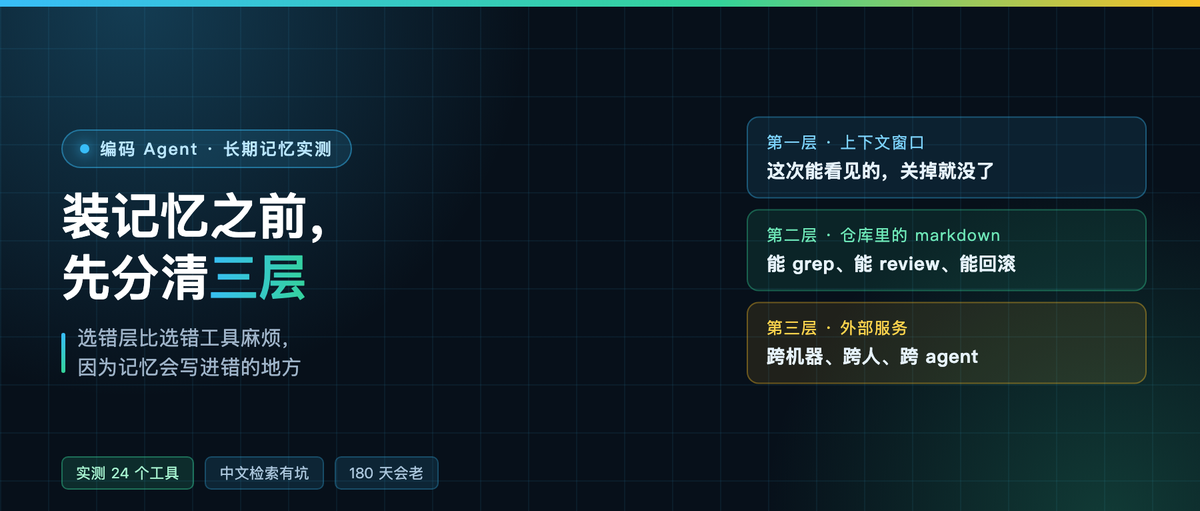
Giving a Coding Agent Memory: First Figure Out Which Layer It Lives In
I have had memorix attached to my DeepSeek Harness the whole time. Months of use, zero problems.
I have had memorix attached to my DeepSeek Harness the whole time. Months of use, zero problems.
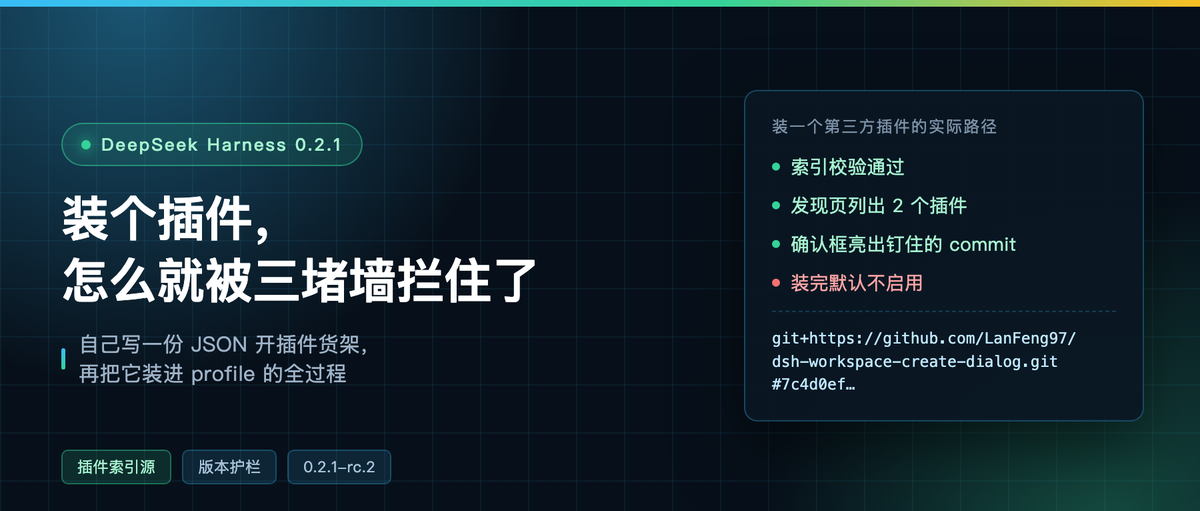
DeepSeek Harness keeps saying Everything is a Plugin, meaning features are all built as plugins. Version 0.2.1 moved one step further and started managing where plugins come from: rc.1 added an entry that lets users discover and install plugins from custom plugin index sources.
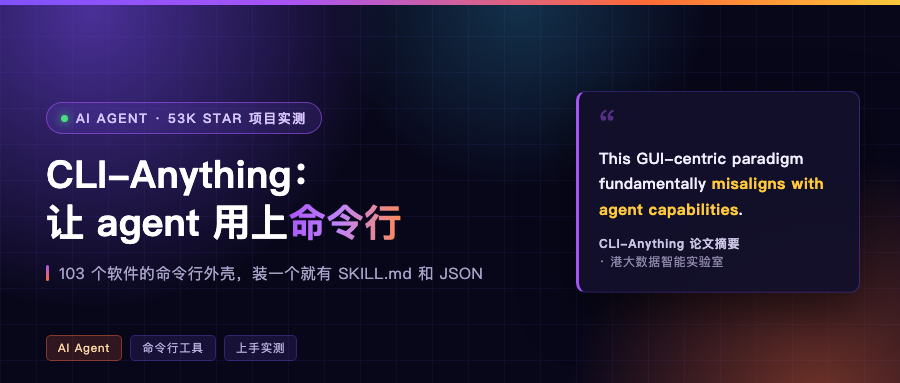
The most common way to make an agent drive software right now is to let it look at screenshots, find buttons, and click coordinates. It works, but it is brittle. Resize a window, move a button a notch, let a page load half a beat slow, and it starts clicking blindly.
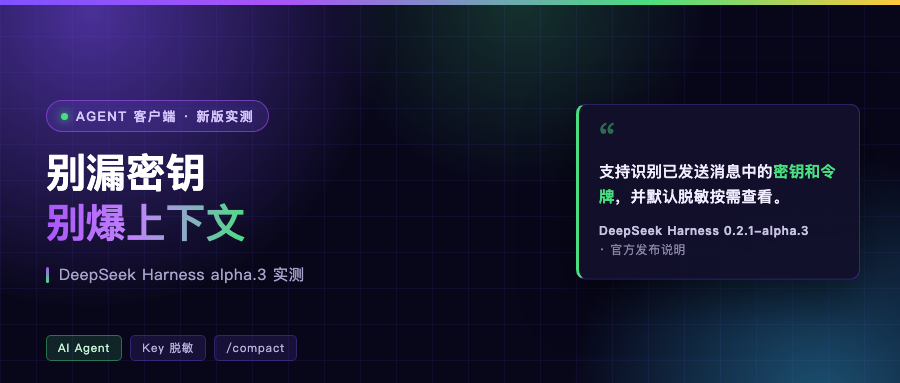
Number one. You paste a chunk of logs into your agent client to chase down a problem, and the logs carry a line DEEPSEEK_API_KEY=sk-.... Problem solved, and that line is still sitting in the session history.
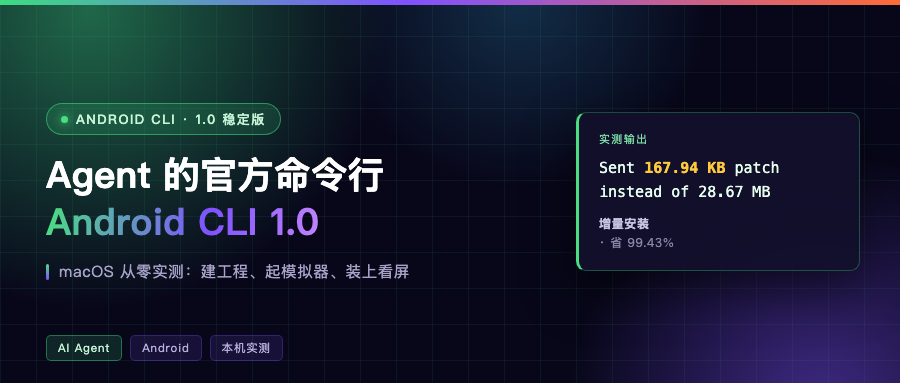
You have an agent write some Kotlin. It says it’s done. Now what?
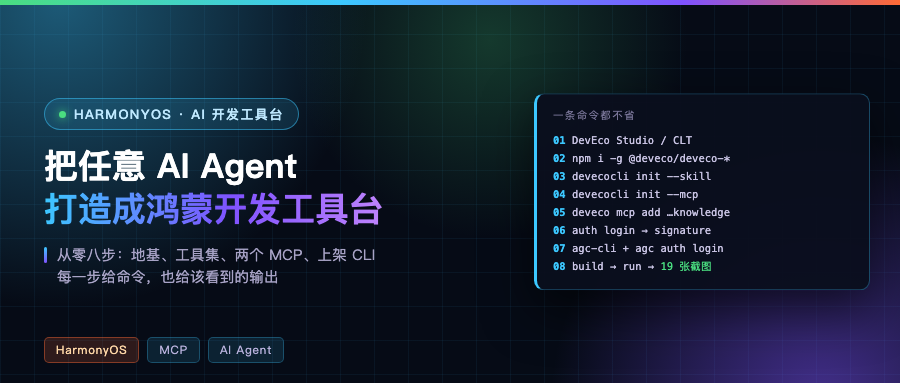
A general-purpose agent writing ArkTS will crash and burn, for exactly three reasons. It does not know ArkTS decorators or build commands; it has no official docs to look things up in, so it invents APIs from memory; and even when the code is right, it has no idea how to build the package, install it on a device, and ship it to the app store.
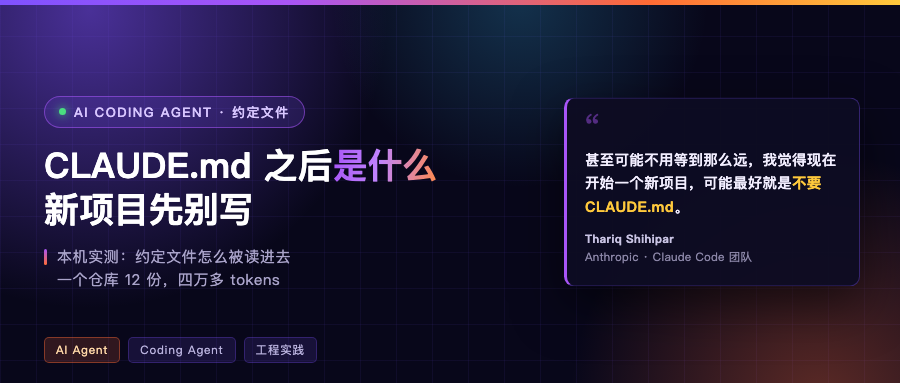
A bit over a month ago, Claude Code refused to support AGENTS.md — the industry convention already adopted by plenty of projects and coding agents — and Shopify CEO Tobi Lütke publicly warned he was ready to drop it. Anthropic’s reasoning at the time sounded reasonable: different models need different context and instructions.
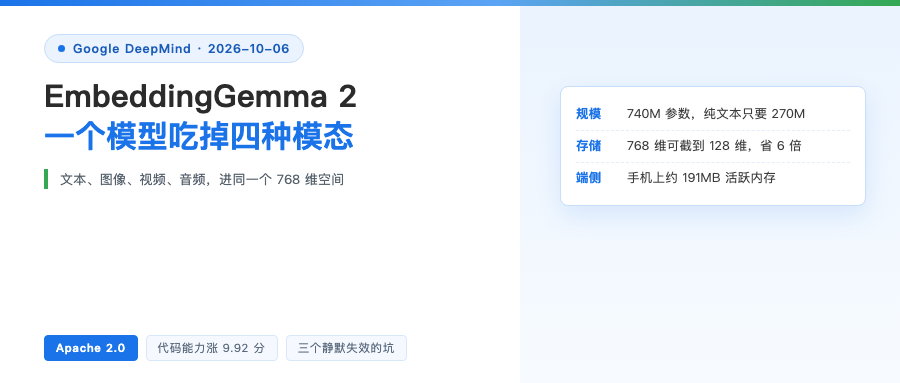
On-device search used to be assembly work. Images had to go through a captioning model to become text, audio had to be transcribed, video had to be frame-extracted and subtitled, and then all of it got thrown at a text embedding model. Every modality you added meant another chain, another slice of latency, another pile of intermediates.
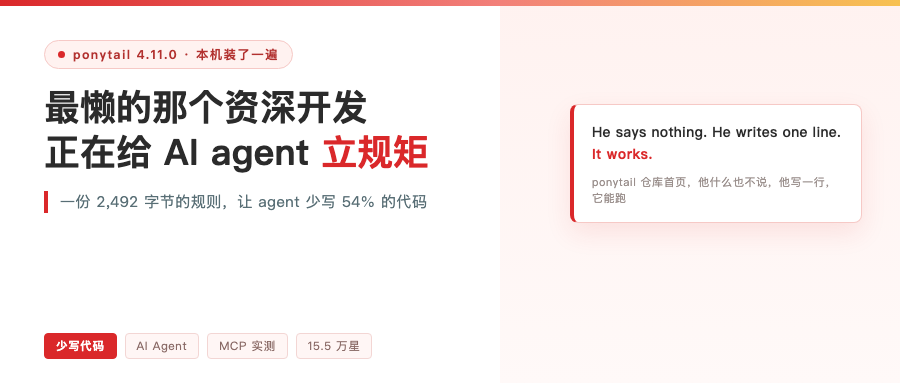
You ask the agent to add a date picker. It installs a calendar library, writes a wrapper component, adds a stylesheet, and then starts discussing time zones with you.
It is two in the morning, the machine has started swapping, you have hit later on the update prompt three times, and you still will not reboot.
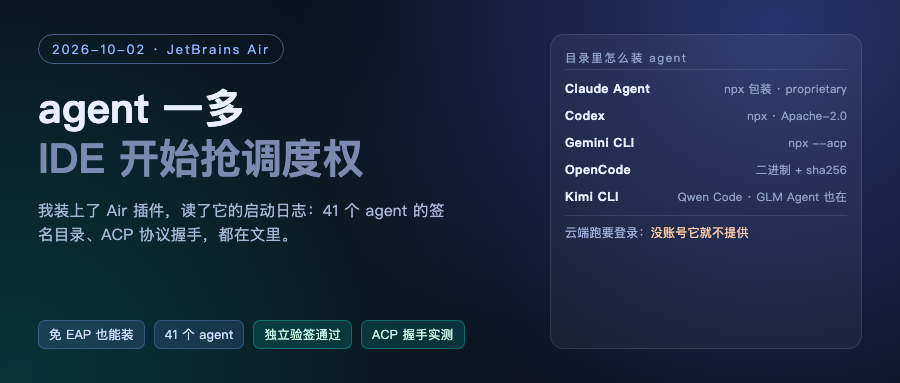
I have three agents installed in my terminal right now: claude, opencode, gemini. A few days in and I hit a new annoyance. Once there are several sessions, I have no idea who is running, who changed which files, or who spent how much. I end up scrolling through terminal history to figure it out.
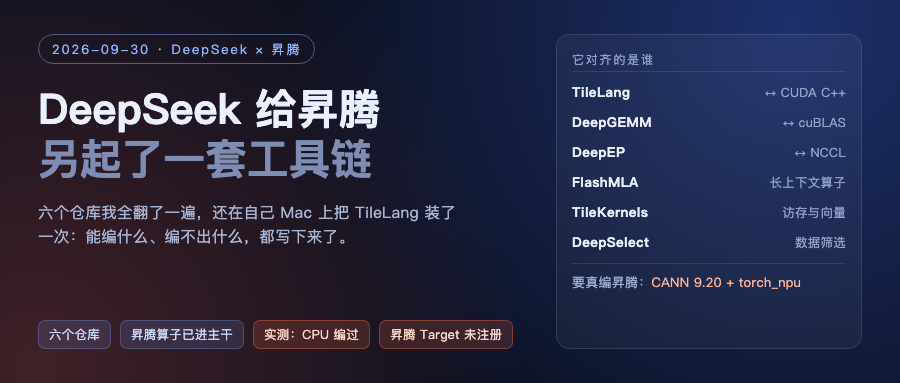
On the morning of September 30, DeepSeek announced on its official WeChat account that it is open-sourcing infrastructure components for Huawei’s Ascend compute platform: a TileLang high-level language compiler tool, a high-performance compute library, and a distributed communication library. Their wording was that these correspond one-to-one with the components previously open-sourced for NVIDIA’s platform.