AI Can Write Swift and Kotlin Now. So What's the Point of Cross-Platform?
On September 10, Shopify’s head of mobile published a post.
On September 10, Shopify’s head of mobile published a post.
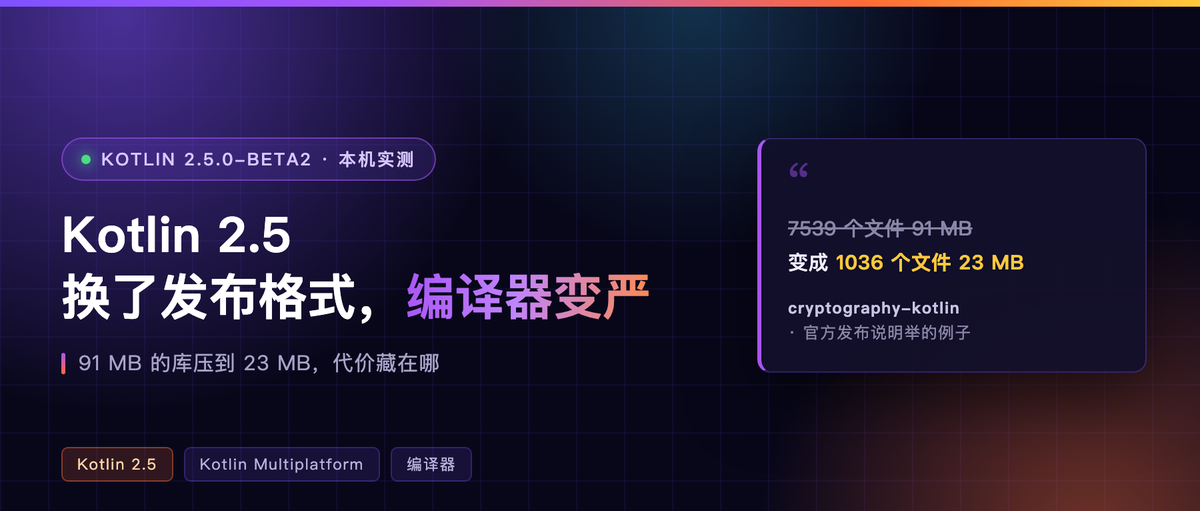
On October 21, Kotlin 2.5.0-Beta2 shipped. Most people open the notes, read the four promoted and two experimental language features, decide it is unremarkable, and close the tab.

On October 6, JetBrains’ Amper blog published its final post, titled Amper Is Now the Kotlin Toolchain. The name carries a line underneath, Moving to the Kotlin Blog, and it means what it says: that blog stops updating as of that day and merges into the Kotlin blog.
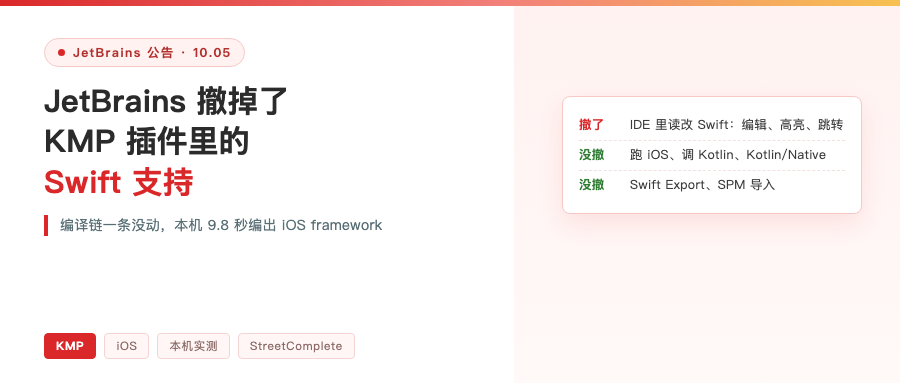
On October 5 JetBrains published a short announcement with a blunt title: IDE support for the Swift language is ending in the KMP plugin. The effective versions are specific: IntelliJ IDEA 2026.3 and Android Studio Rabbit 2 | 2026.2.2.
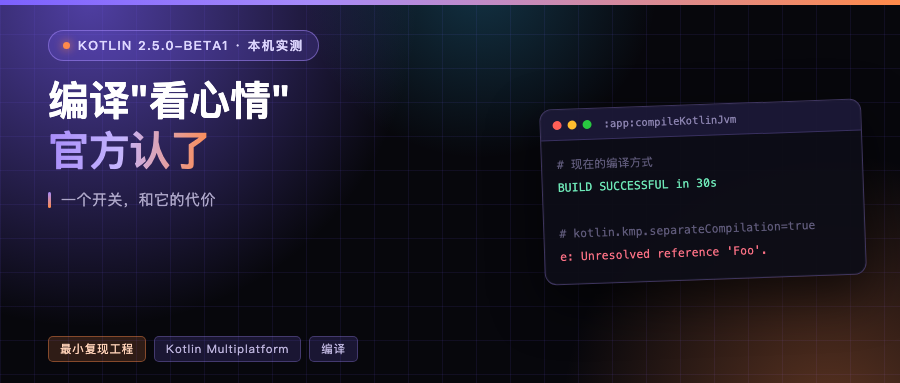
If you write Kotlin Multiplatform you have probably hit this: the line is red in the IDE, underlined with a cannot find symbol, you hesitate for ages and do not dare commit, then you build and it is green, and it even runs correctly.

Same JSON, same app, same run.
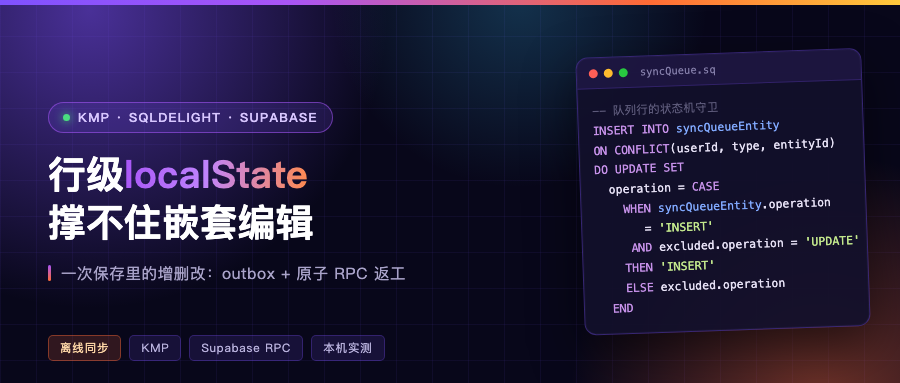
A user edits a checklist on the subway: adds two levels, renames one of them, deletes the one they do not want. The whole thing happens offline and only uploads once they are back above ground.

A couple of days ago a post about a niche piece of software crossed my feed — a project called Piko, posted by its own developer: an open-source third-party PikPak client, Android and Windows, sharing both UI and business code across the two.
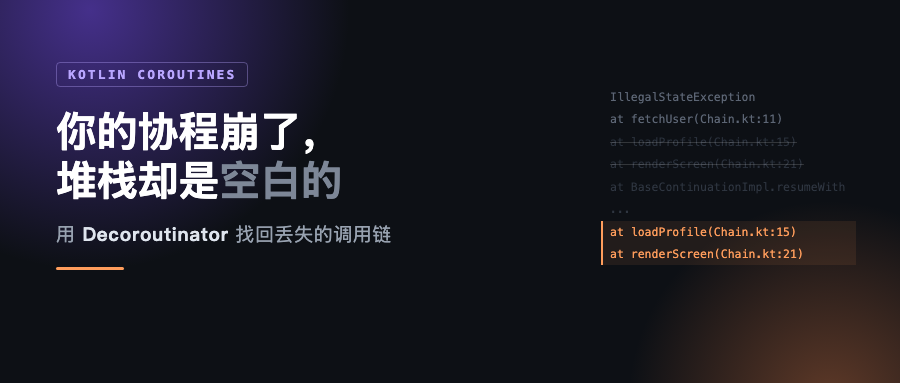
Production threw an IllegalStateException. You open the stack trace and see this:
Python’s agent frameworks have already cycled through several generations — LangChain, LlamaIndex, and now Google’s own ADK. Kotlin has been quiet the whole time — not because nobody wanted to build one, but because there was nothing official to lean on, and nobody quite dared put it in production.
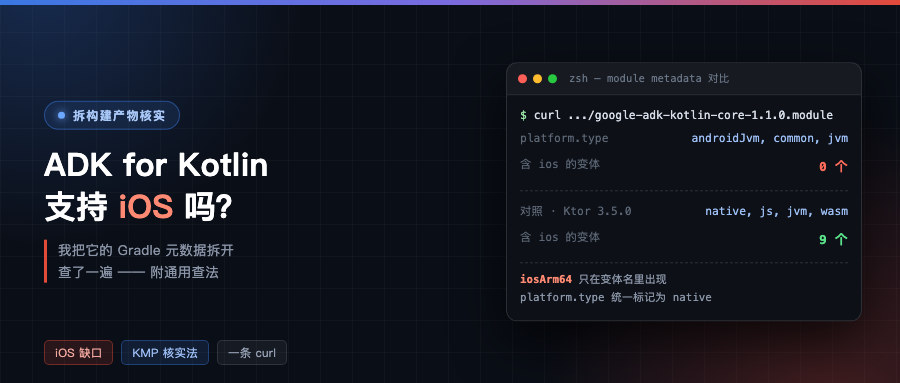
When I introduced ADK for Kotlin 1.0, I wrote that “if iOS support lands later, that’s one codebase reused across three platforms.” That wording was slippery — placed next to “KMP core,” it reads way too easily as “iOS should just work.”
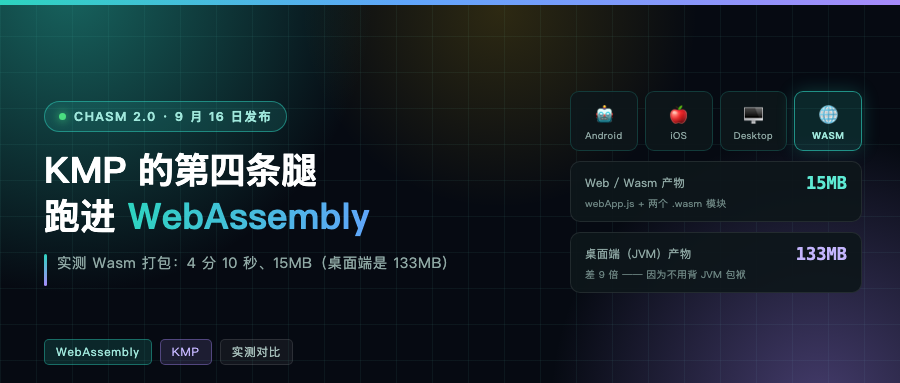
Android, iOS, desktop: the three places KMP has covered solidly for years. The fourth leg is WebAssembly, and last week’s Chasm 2.0 is on that line.